Cornell Computational Cognition Lab (In Progress)
Principal Investigator: Dr. Nori Jacoby
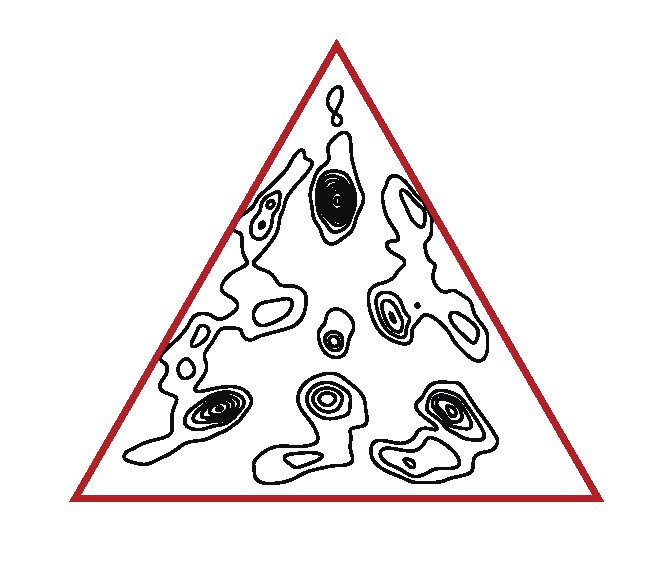
The CoCoCo Lab (Cornell Computational Cognition Lab) studies how intelligence, creativity, and culture emerge from interactions among individuals, technologies, and societies. We combine behavioral experiments, machine learning, large-scale online studies, computational modeling, and global fieldwork to uncover the principles governing perception, learning, coordination, and cultural evolution, with the goal of developing unified theories that connect individual cognition to collective behavior across cultures, contexts, and developmental timescales.
Our research spans levels of organization—from neural and cognitive representations to collective behavior and population-level cultural dynamics—linking individual minds to emergent social systems, including rapidly evolving human–AI hybrid societies. Through scalable experimental platforms and integrative theory, we aim to reveal how collective intelligence forms and adapts.
We also develop open scientific infrastructure, including PsyNet, a scalable framework for designing and deploying high-powered online behavioral experiments across cultures and populations. Our work appears in leading journals and conferences including Nature Human Behaviour, PNAS, Science Advances, Nature Communications, NeurIPS, and ICML.
Research Pillars
Collective & Cultural Evolution
How ideas, norms, and creative products spread, stabilize, diversify, and transform across individuals, groups, and generations—and why cultures vary.
Examples: social learning strategies, incentive structures, collective creativity, cultural transmission, popularity dynamics, cumulative culture
Internal Representations
Mapping perceptual and cognitive representations using adaptive experiments, rich stimulus spaces, and computational models to understand how humans learn, generalize, and abstract.
Examples: representation learning, adaptive psychophysics, large-scale stimulus sampling, human–model comparisons
Human–AI & Hybrid Societies
Studying how humans and AI systems co-adapt in shared environments, and identifying the conditions under which collaboration becomes robust, creative, aligned, and socially beneficial.
Examples: collaborative coding, human–AI co-creativity, hybrid collective intelligence, algorithmic mediation of culture, scalable experimental platforms
Interested in joining or collaborating?
Email kj338@cornell.edu.